

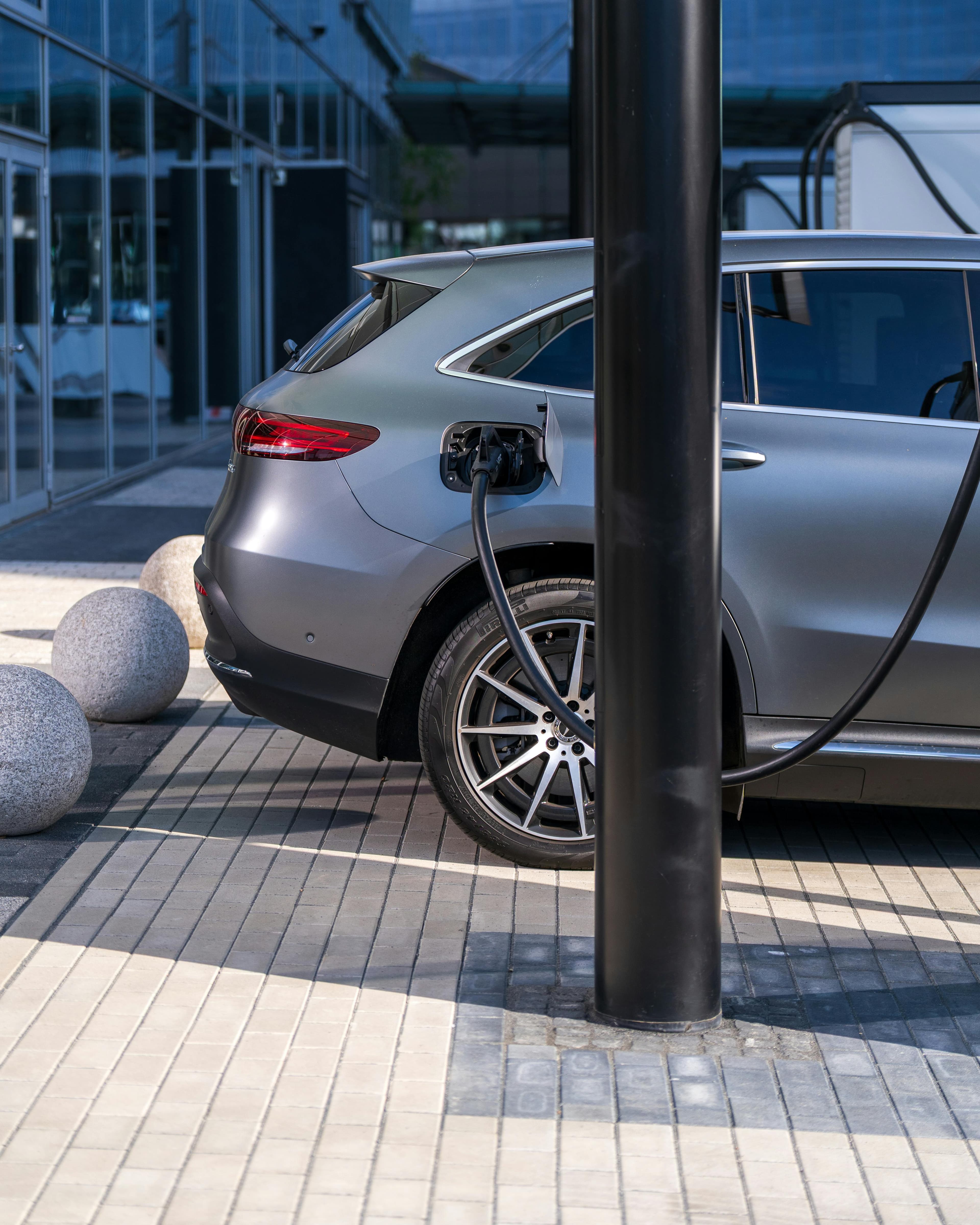
What is commercial EV finance?
Commercial EV finance is finance for businesses with an ABN to purchase electric vehicles, structured as a chattel mortgage, finance lease, or operating lease. It suits businesses buying a single company car or an entire fleet, with terms typically from 1-7 years. Turnaround time for a decision depends on the lender and how complete your documentation is — some panel lenders can indicate within 24-48 hours, others take longer, especially for larger fleet or newer-business applications.
With 6+ months of trading history, your business can typically access chattel mortgages, finance leases, and operating leases tailored to your cash flow requirements — exact eligibility depends on the lender. Electric vehicles purchased for business use may qualify for tax deductions including GST claims, depreciation, and interest expenses, subject to the ATO's car limit and GST credit cap for the relevant financial year (see below).
Key benefits
- Tax Deductions: Claim GST on the purchase price (if registered, capped at the ATO's GST credit limit), depreciation, and interest expenses
- Flexible Terms: Finance periods from 1-7 years with balloon payment options, subject to lender approval
- Fleet Packages: Competitive rates and consolidated billing for multiple vehicles
- Fast Assessment: Many applications can be assessed within 24-48 hours with complete documentation, though this varies by lender
- Lower Running Costs: EVs typically cost less to operate than petrol/diesel vehicles
- Preserve Cash Flow: Spread the cost over time rather than paying upfront
Commercial EV finance options
Chattel mortgage
A chattel mortgage allows you to own the vehicle from day one whilst the lender holds a charge over it as security. This is a popular option for businesses that want immediate ownership and the tax treatment that comes with owning the asset, subject to the car limit.
- Claim a GST credit on the purchase price (if registered), capped at 1/11th of the ATO's car limit for the year
- Deduct depreciation (also capped at the car limit) and interest expenses
- Balloon payment options available, set by the lender — not the ATO
- Vehicle appears on your balance sheet as an asset, with the loan as a liability
Finance lease
With a finance lease, the lender owns the vehicle during the lease term. At the end, you can purchase the vehicle for the residual value, refinance it, or return it.
- Claim lease payments as business expenses
- GST claimable progressively on each payment
- Under current accounting standards (AASB 16), most business lessees must recognise the leased vehicle and lease liability on their balance sheet — this differs from older treatments, so confirm the applicable accounting treatment with your accountant
- Flexible end-of-lease options
Operating lease
An operating lease (also called a rental) is ideal for businesses wanting to use an EV without owning it. Fixed monthly payments cover the vehicle cost and can include maintenance.
- Lease payments may be tax-deductible business expenses, subject to your circumstances
- No ownership obligations
- Maintenance packages available
- Upgrade to newer models easily
Providing an EV to a director or employee? The FBT exemption changes the maths
If your business provides a vehicle to a director or employee for personal use, Fringe Benefits Tax (FBT) normally applies. Eligible electric vehicles under the luxury car tax threshold for fuel-efficient vehicles ($91,661 for the 2026-27 financial year) are exempt from FBT entirely - a saving that can run into thousands of dollars a year compared to an equivalent petrol vehicle. This full exemption is legislated to narrow from 1 April 2027, when a $75,000 cap applies for the full exemption and a partial discount applies above that up to the threshold, so getting the structure right sooner rather than later matters.
The most tax-effective way to access this exemption is usually through a novated lease rather than a straight business purchase - see our full breakdown of how the EV novated lease FBT exemption works, or talk to a broker about whether it fits your situation better than a chattel mortgage.
Eligibility requirements
Requirements vary by lender, but these are typical starting points across our panel:
- Active ABN, generally with 6+ months trading history (some lenders accept newer ABNs with supporting financials)
- GST registration (not required, but relevant to the tax benefits available)
- Good business credit history for the business and its directors
- Recent financial statements or tax returns — exact requirements depend on the lender and loan size
- A deposit is not always required, but 10-20% is common and can improve your rate; this varies significantly by lender
A broker can tell you which lenders on our panel are likely to consider your specific business.
How to apply
Choose Your EV
Select the electric vehicle(s) that suit your business needs. We finance all makes and models including Tesla, BYD, MG, Hyundai, and commercial EV vans.
Submit Your Application
Complete our quick online form or call us on 1800 4 NUDGE (1800 468 343). We'll need basic business details and information about the vehicle you're purchasing.
Get Assessed
Many applications with complete documentation can be assessed within 24-48 hours, though this varies by lender and business complexity. We'll present you with finance options from our panel of lenders for you to compare.
Arrange Settlement
Once approved, we coordinate with the dealer or private seller to arrange payment and delivery. You can be driving your new EV within days.
This page provides general information only and does not constitute financial, tax, or accounting advice. Approval times, deposit requirements, and eligibility criteria vary by lender and individual circumstances. Tax laws and accounting standards change regularly — consult a qualified accountant before relying on the treatment described above. EVFinancer (ACN 550348) connects you with licensed finance brokers. Authorised representative of Australian Credit Licence No. 444332.